
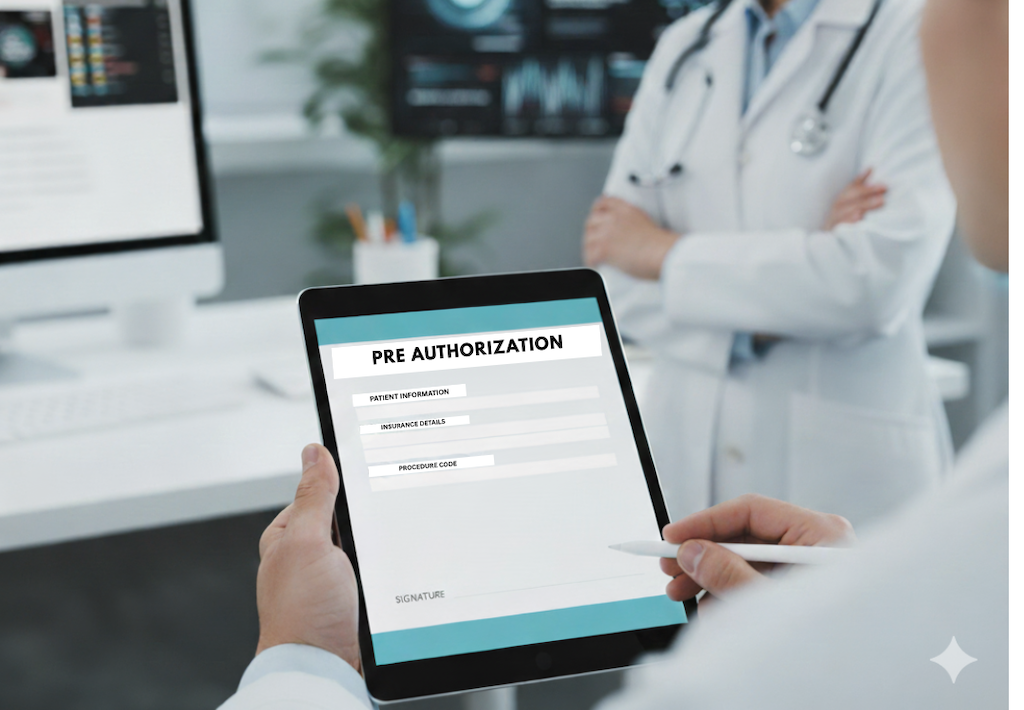
PRE - AUTHORIZATION PROCESS
What is Pre-Authorization?
Pre-authorization, also called prior authorization (PA), is the process by which a healthcare provider obtains approval from a patient’s insurance company before delivering a service, procedure, test, or medication. It ensures the insurer agrees to cover the cost.
Key goals of pre-authorization:
- Confirm the medical necessity of a service
- Minimize unexpected out-of-pocket expenses for patients
- Reduce claim denials after services are rendered
For example, costly imaging tests like MRIs or specialty medications often require pre-authorization to ensure coverage. Without it, providers risk claim denials, leaving patients responsible for payment.
At RCMediX Health, we specialize in pre-authorization services that streamline approvals and safeguard provider revenue.
There is no singular, universally "best" approach. The optimal choice for your healthcare entity – whether a multi-specialty hospital, a specialized clinic, or an individual practitioner – hinges on a nuanced evaluation of your unique operational needs, existing resources, and long-term healthcare revenue optimization goals. This comprehensive guide delves into the distinct advantages and inherent challenges of each model, empowering you to make an informed decision that secures your practice's financial vitality.
Why Pre-Authorization Matters
Pre-authorization is more than a bureaucratic requirement—it’s a critical component of revenue cycle management (RCM):
- Financial protection for patients: Prevents surprise bills and ensures coverage
- Revenue assurance for providers: Reduces denials and improves cash flow
- Clinical oversight: Ensures treatments follow evidence-based guidelines
- Operational efficiency: Streamlines scheduling and administrative workflow
Our team integrates these steps seamlessly into your practice to maximize efficiency and reimbursement.
Step-by-Step Pre-Authorization Process
-
1. Identify Services That Require Pre-Authorization Not all procedures or services need approval. Common services requiring pre-authorization include:
• High-cost imaging (MRI, CT, PET scans)
• Specialty medications (biologics, injectables)
• Surgeries or invasive procedures (inpatient and outpatient)
• Durable medical equipment (wheelchairs, CPAP machines, prosthetics)
Tip: Always check the patient’s insurance policy or provider portal. RCMediX Health provides guidance on insurer-specific requirements -
2. Gather Required Information Successful pre-authorization starts with thorough preparation:
• Patient information: Name, date of birth, insurance ID, and plan details
• Diagnosis & procedure codes: Correct ICD-10 and CPT codes
• Clinical documentation: Evidence supporting medical necessity
• Provider details: NPI, Tax ID, and contact information Meticulous documentation reduces delays and improves approval rates.
RCMediX Health ensures all documents are complete and accurate -
3. Submit the Pre-Authorization Request Submission methods vary by insurer:
• Online portals: Fastest method for most insurers
• Fax: Still widely used in healthcare
• Phone: For urgent or complex requests Pro Tip: Confirm each insurer’s preferred method.
RCMediX Health leverages technology to ensure accurate, timely submissions. -
4. Follow Up Pre-authorization can take 24 hours to several weeks. Effective follow-up is crucial:
• Mark urgent requests clearly
• Contact the insurer if no response is received
• Maintain a tracking system to avoid missed deadlines We maintain a dedicated follow-up system to ensure approvals stay on track. -
5. Receive Approval or Denial After review, insurers either approve or deny the request:
• Approval: Proceed with the service. Always save the reference number.
• Denial: Often appeals are possible.
Common reasons include incomplete paperwork, incorrect coding, or lack of medical necessity.
RCMediX Health efficiently handles appeals to protect revenue and reduce administrative burden.
Tips to Streamline Pre-Authorization
- • Stay organized with tracking systems or RCM software
- • Train staff on pre-authorization requirements and procedures
- • Leverage technology for submissions, follow-ups, and tracking
- • Build relationships with insurers to expedite approvals
- • Use standardized templates for common procedures
- • Set internal deadlines to allow sufficient time for approval
When to Consider Outsourcing Pre-Authorization
- Outsourcing can relieve administrative burdens and improve efficiency:
- • Dedicated teams for requests and follow-ups relieve administrative burdens and improve efficiency:
- • Faster processing and fewer denials
- • Staff can focus on patient care
- • Expertise in managing complex cases and multiple insurers
- RCMediX Health provides specialized pre-authorization services for high-volume practices and specialty clinics.
How Pre-Authorization Enhances Revenue Cycle Management
- Efficient pre-authorization:
- • Ensures clean claims before submission
- • Reduces denial rates and rework
- • Improves cash flow and lowers days in A/R
- • Enhances patient experience by preventing surprise bills
- With RCMediX Health, pre-authorization becomes a revenue-protecting tool, not just an administrative task.
- Leverage RCMediX Health’s pre-authorization expertise to streamline workflows, protect revenue, and ensure patients receive timely care without administrative hurdles.
Get Started
Unlock the Full Revenue Potential of Your Practice
RCMediX Health helps transform coding from a risk area into a strategic advantage. Contact us today for a consultation and learn how accurate coding can drive measurable financial improvement.